Industrial Heritage in Upper Silesia: Mines, Ironworks and Workers' Settlements
The industrial heritage of Upper Silesia bears witness to one of the largest historical industrial regions in Europe. Hard coal, zinc, lead and iron were the basis of its development. The traces of this industry still shape the look of many towns in the region. Anyone planning to visit these places will find here an overview of the main ironworks, mines and workers' settlements. They show how closely Upper Silesia's industrial development was bound up with the lives and work of its people.
Ironworks and the Beginnings of Industry: What Arose in Gleiwitz?
The Royal Iron Foundry in Gleiwitz (Gliwice) was founded in 1796. It is regarded as the first foundry on the European continent with a coke-fired blast furnace. Its history thus reaches back to an early phase of Upper Silesian industrial development, when smelting technology was still evolving.
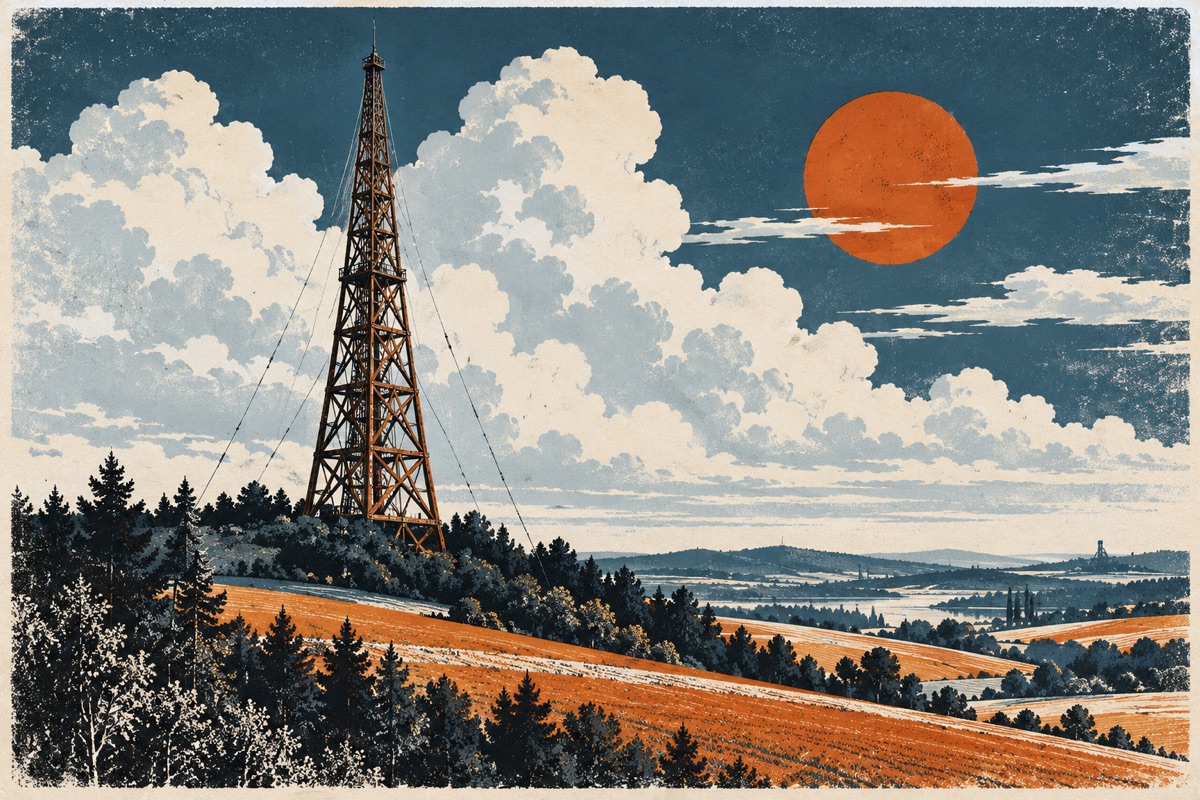
Gleiwitz also has a wooden radio tower from 1935. Although it served a different purpose than ironworks and mines, it too is one of the region's technical monuments. In a single town you can therefore find evidence of different stages of industrial and technical development, from metallurgy to communications engineering.
Mines: Guido, Tarnowitz and the Silesian Museum
At the Guido Mine in Zabrze (Hindenburg), visitors can explore underground tunnels at levels 170 and 320 meters deep. There you can experience directly what the working world underground looked like, something otherwise often seen only in photographs. Before your visit it is advisable to check current opening hours, prices and visiting conditions.
Tarnowskie Góry (Tarnowitz) stands for the older mining history. The former silver and lead mine with its underground drainage system was added to the UNESCO World Heritage List in 2017. This recognition underlines that the industrial importance of the region rests not only on coal and ironworks but also on the extraction of precious and nonferrous metals. The drainage system also illustrates which technical tasks, beyond the extraction itself, belonged to running a mine.
The Silesian Museum in Kattowitz (Katowice) shows how former mining land can be put to new use. It has stood since 2015 on the grounds of the former Katowice coal mine. A former industrial site has thus become a place of culture. A museum visit complements a mine tour, because here the history of the site meets its present use.
Nikiszowiec and Familoki: How Did the Workers Live?
Along with industry came not only workplaces but entire settlements. Nikiszowiec in Kattowitz is a miners' settlement from 1908 to 1919 with uniform red brick buildings. The layout and the consistent building material show that the settlement was built to a common design.
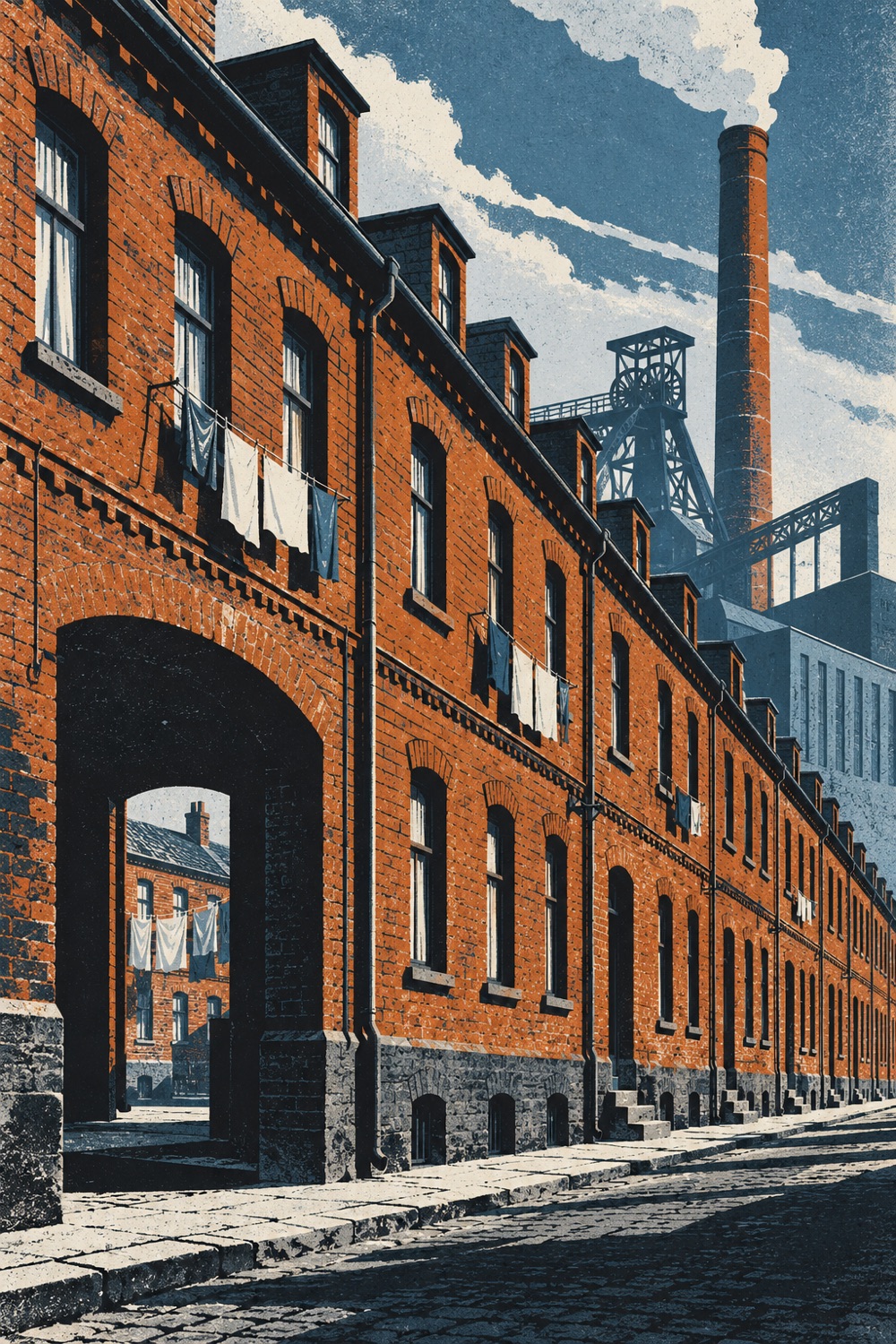
Also typical of the region are the Familoki, multistory workers' houses for several families. They provided housing for employees of the mines and ironworks. Workers' settlements like Nikiszowiec therefore belong to the industrial heritage just as much as shafts and furnaces do. In their houses played out the everyday life of the people whose labor sustained the industry. Only a look at these living quarters makes clear how closely industry and daily life were connected in Upper Silesia.
The Industrial Monuments Route: How Can the Places Be Linked?
The Industrial Monuments Route of Silesian Voivodeship connects several dozen sites in different towns of the region. Visitors can assemble their own itinerary around a theme, such as mining, ironworking or workers' housing. Since the sites lie far apart, it is advisable to spread the visits over several shorter trips instead of planning one long journey.
Grouping by town helps here. In Gleiwitz you can visit the foundry and the radio tower, in Zabrze the Guido Mine, and in Kattowitz Nikiszowiec and the Silesian Museum. Each outing can have its own focus. Together the visits give a comprehensive picture of how people in the region lived and worked.
Ironworks, mines and settlements make different sides of Upper Silesia's industrial history visible. Along the route these sites can be linked and chosen according to interest, in order to get to know the former working world and the everyday life of its residents.