Customs and Traditions in Upper Silesia: St. Barbara's Day, Annaberg and Cuisine
The traditions of Upper Silesia are rooted in work, faith and the coexistence of different cultures. This is most visible in the places and customs that shape the image of the region. They include the miners' festival and an important pilgrimage site, as well as the regional cuisine, the dialect and the architecture of the towns. These examples help show what makes Upper Silesia what it is and how its traditions are tied to its history.
St. Barbara's Day: The Miners' Festival
Barbórka, the miners' festival, is celebrated on December 4. On this day people remember Saint Barbara, the patron saint of miners. The festival counts among the best-known traditions of Upper Silesia. In towns shaped by mining in particular, the day carries real importance.
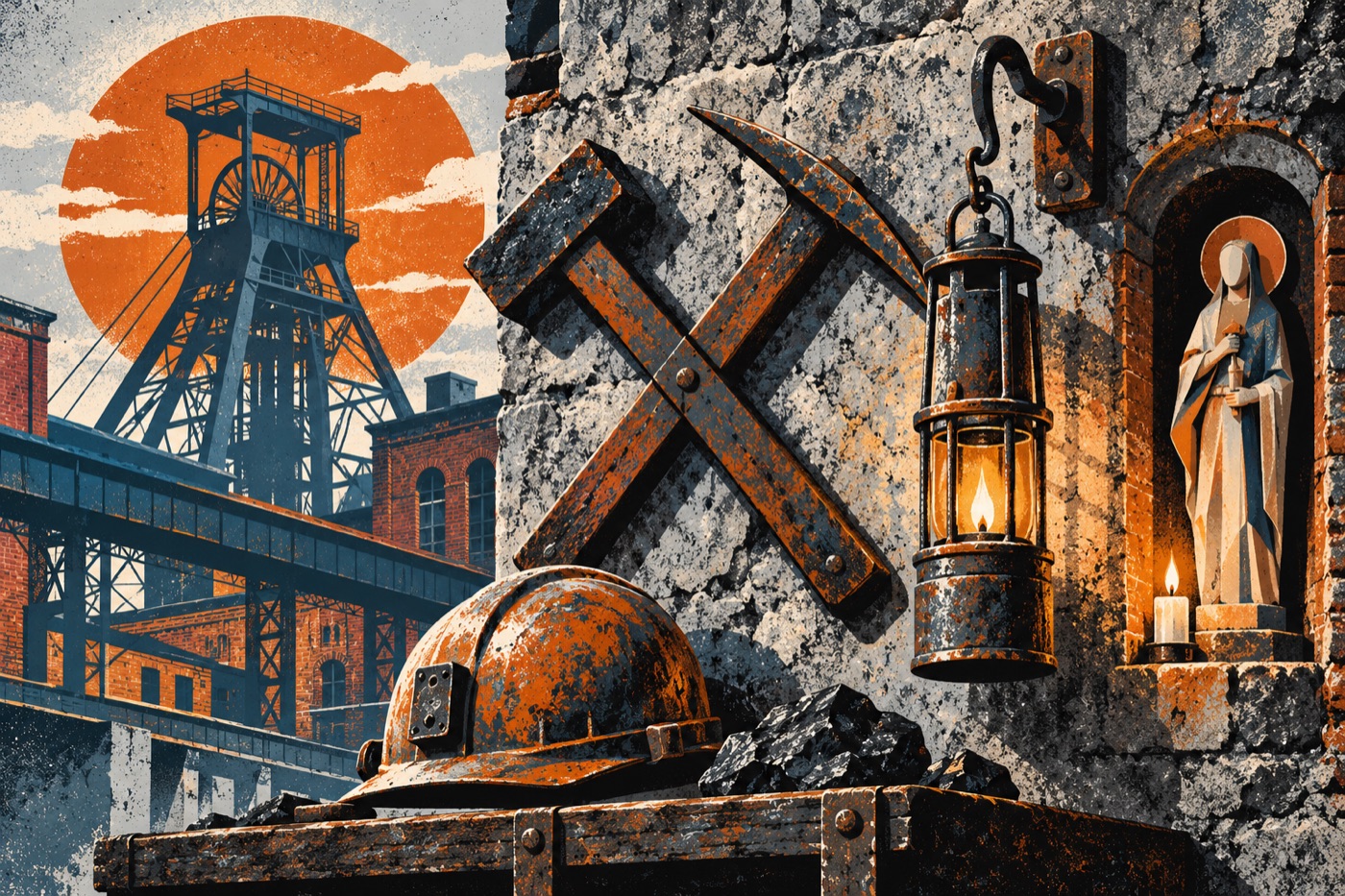
In many towns of the region, a musical wake-up call, miners' bands and solemn gatherings are part of Barbórka. How the festival unfolds differs from place to place, so detailed programs are best found in local sources. What the celebrations share is a link between faith and profession: Saint Barbara, patron saint of miners, stands at the center. Barbórka thus makes visible the close relationship between religious custom and mining tradition.
Annaberg: A Place of Pilgrimage
Annaberg (Polish: Góra Świętej Anny) lies in Opole Voivodeship. It has been a pilgrimage site for centuries and is home to a Franciscan monastery. The long history of pilgrimages shows how deeply religious customs are rooted in Upper Silesia and what the place means for this tradition.
The two names recall the centuries-long coexistence of languages and cultures that has shaped the entire region. Such links also appear in literature. Joseph von Eichendorff, a poet of German Romanticism, was born in 1788 in Lubowitz near Ratibor. Polish and German influences met there. Annaberg and Eichendorff's origins therefore point to a shared feature: the traditions of Upper Silesia developed at the crossroads of different cultures.
What Is Typical of Silesian Cuisine?
Beef rolls with Silesian dumplings and red cabbage are among the classic dishes of the region. The combination is a typical example of Upper Silesian cooking. A hallmark of Silesian dumplings is the dip in the middle, where the gravy collects. This small detail serves a practical purpose and shows how form and use fit together in this dish.
Regional cuisine is as much a part of Upper Silesian traditions as Barbórka and the pilgrimages. Anyone who wants to cook the dishes at home will find precise recipes in cookbooks on the region's cuisine. Quantities and preparation can vary from household to household, though. Beef rolls with dumplings and red cabbage are one example from this cuisine and count as classics in this combination.
Dialect and Familoki: Traces of History
The Silesian dialect and the German-Polish coexistence have shaped the regional vocabulary. They give the language in Upper Silesia its own character. In the dialect you can see how closely traditions are tied to the history of living together. Its vocabulary preserves traces of the various cultural influences that met in the region.
Architecture also tells of this history. Familoki, meaning workers' houses, still define the look of many towns today. They recall a time when the life of local communities was closely tied to work. A part of the region's past can be read from these houses. Together with the dialect, they make the cultural heritage of Upper Silesia tangible in everyday life: in the built environment as well as in the spoken language.
Upper Silesian Traditions in Brief
The traditions of Upper Silesia are closely interlinked. Barbórka and Annaberg stand for them just as much as beef rolls with dumplings, the dialect and the Familoki. From different angles they show how work, faith and the coexistence of cultures have shaped the region. Each of these areas can be explored on its own. Together they give a fuller picture of the regional history and of the customs that define Upper Silesia.